
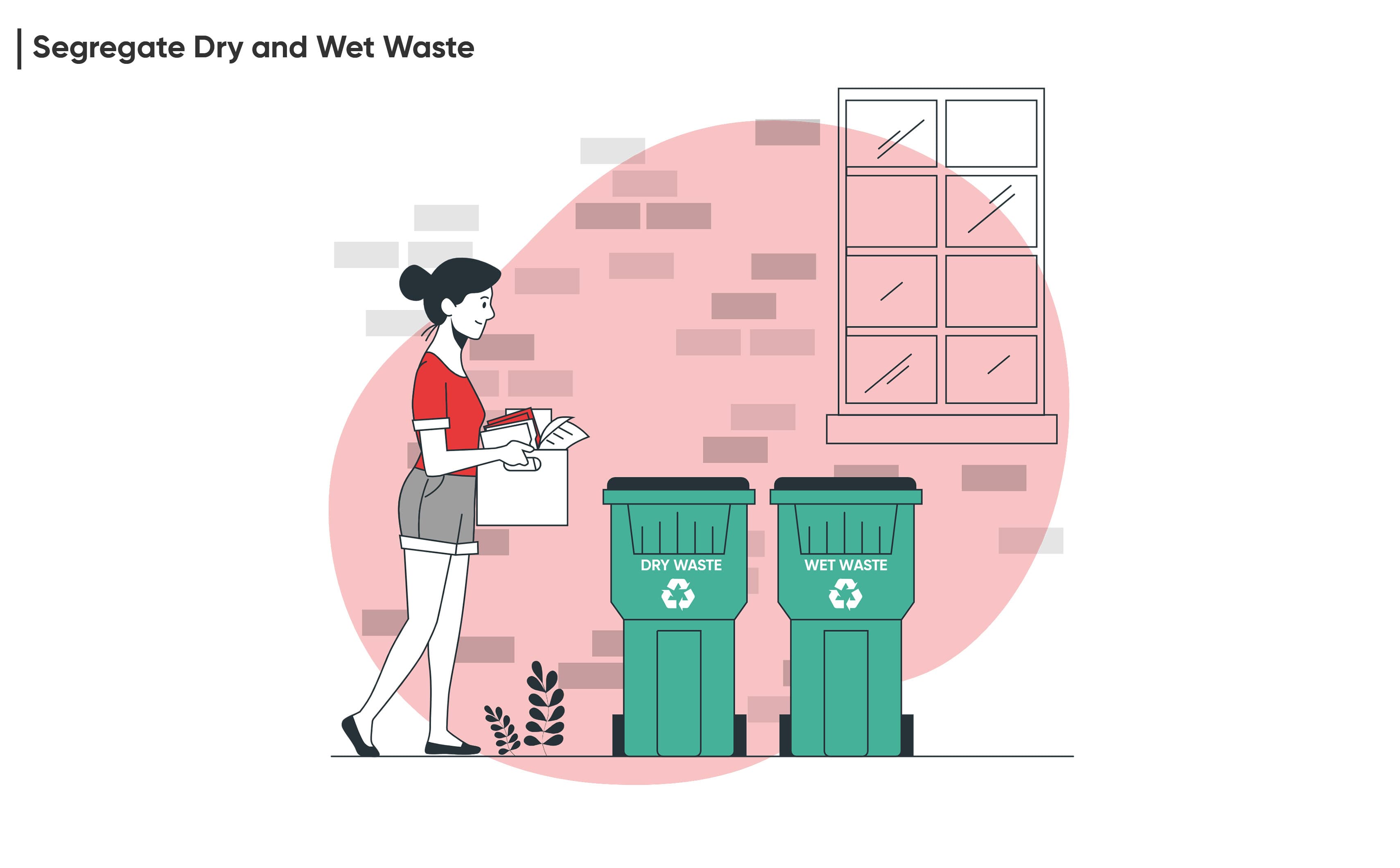
Segregate Dry & Wet Waste
Segregating wet and dry waste is important for several reasons, and it is essential for every household to participate in this practice. Here are the key reasons why waste segregation is crucial:
Effective Waste Management: Segregating waste into wet (organic) and dry (inorganic) categories enables more efficient waste management processes.
Recycling Opportunities: Separating dry waste from wet waste makes it easier to identify recyclable materials such as paper, plastic, metal, and glass.
Composting and Resource Recovery: Wet waste, which includes food scraps, vegetable peels, and garden waste, can be composted.
Environmental Impact: When wet and dry waste are mixed together, it becomes difficult to manage and treat the waste effectively. This can lead to environmental pollution, contamination of water bodies, and soil degradation.
Health and Hygiene: Proper waste segregation reduces the risk of pests, insects, and diseases associated with unmanaged waste.
steps_to_finish
- Set up separate bins: Have two distinct bins—one for dry waste and another for wet waste.
- Identify waste types: Understand what qualifies as dry waste (e.g., plastics, metals, papers) and wet waste (e.g., food scraps, organic materials).
- Segregate during disposal: When disposing of waste, separate dry and wet items.
- Responsible disposal: Dispose of dry waste by recycling it through designated channels, and manage wet waste through composting or municipal waste management services